
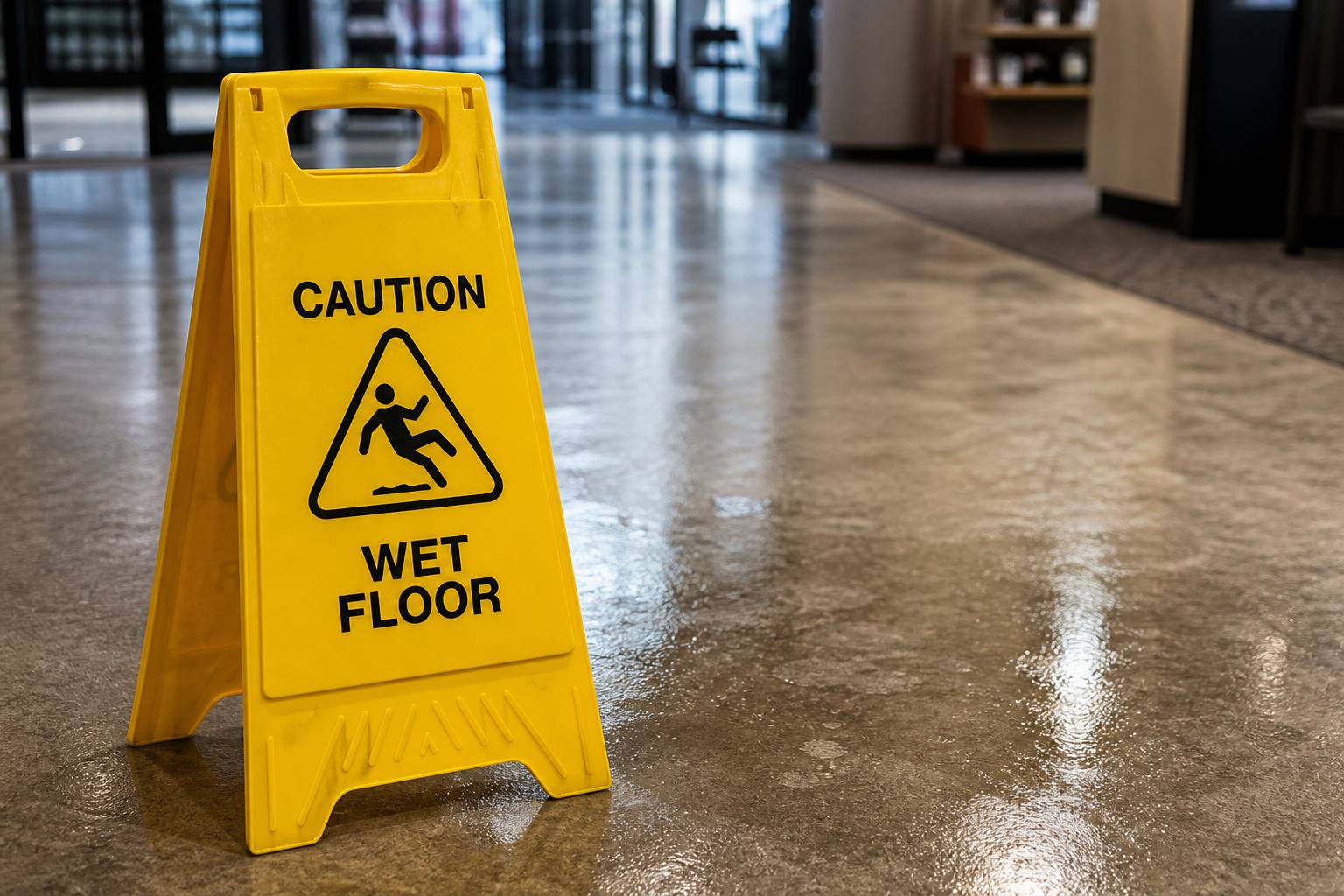
Property owners in Beverly Hills often claim a wet floor sign absolves them of liability. This defense isn’t always valid.
If you were injured in Beverly Hills or elsewhere in Los Angeles County, the steps below can help protect your claim.
After a slip and fall accident, property owners frequently claim they posted a wet floor sign and therefore aren’t liable. However, this defense has significant limitations.
When Warnings Are Sufficient
A warning can protect property owners if it was clearly visible, adequate for the hazard, positioned to give notice before encountering the danger, and the hazard was temporary while being corrected.
When Warnings Are Inadequate
A small sign in a large area, a sign placed after you already fell, insufficient warnings for the severity of danger, or warnings for hazards that should have been eliminated, not just warned about.
The Sign Wasn’t There Defense
Property owners sometimes claim they posted warnings that weren’t actually present. Witness testimony and photographs can defeat this false claim.
Better Than a Warning
Often, property owners should eliminate hazards rather than just warn about them. For example, closing a wet area until dry is safer than letting people walk through with only a warning sign.
Sign Placement Matters
A wet floor sign at the edge of a slippery area may not provide adequate warning. By the time you see it, you may already be in danger.
Visibility Issues
Poor lighting, sign placement, or visual obstructions can make warnings ineffective. A warning you can’t see doesn’t protect the property owner.
Open and Obvious Hazard
Property owners argue some hazards are so obvious that warnings aren’t needed. However, even obvious hazards can create liability if there’s no safe alternative path.
Necessity of Hazard
Courts consider whether the hazard was necessary. Mopping during business hours creates unnecessary danger when it could be done after hours.
Your Attention
Property owners claim you should have seen the warning. However, customers aren’t required to constantly look down for hazard signs. Property owners must make premises safe.
Comparative Negligence
Even if a warning was present, you can still recover compensation. California’s comparative negligence rule allows recovery even if you were partially at fault for not seeing the warning.
Challenging the Defense
An attorney investigates whether warnings were actually present, adequate, and properly positioned. Witness testimony, photographs, and expert analysis defeat improper warning defenses.
Don’t Accept Blame
Just because a property owner claims they posted a warning doesn’t mean they’re off the hook. An experienced attorney analyzes all facts to determine true liability.
If you were injured despite a warning sign, you may still have a valid claim. Consult an attorney before accepting the property owner’s version of events.
Need Legal Help?
Contact us today for a free consultation about your case